
Rain is the variable nobody puts on their wedding mood board, but in Portland it shapes more of your reception than the flowers do. A DJ who’s worked dozens of Willamette Valley barns and Columbia Gorge overlooks knows how to move a first dance indoors in ninety seconds flat, or keep a dance floor lively when a downpour has half your guest list checking their phones for ride shares. That kind of judgment doesn’t show up on a price sheet, which is exactly why picking a wedding DJ services in Portland, OR this city takes more than comparing hourly rates.
Portland’s wedding scene runs the gamut from downtown hotel ballrooms to working farms out past Sherwood, and each setting puts different demands on entertainment. A DJ who’s excellent at a tightly-run Sentinel Hotel reception might be out of their depth running sound for two hundred guests under a tent at a Hood River vineyard with no power hookup nearby. Below is a practical framework for narrowing the field, along with what to ask before you sign anything.
What Actually Separates a Good Wedding DJ From a Great One
Anyone with a laptop and a subscription to a streaming service can call themselves a DJ. What separates the professionals worth paying for comes down to a handful of things that rarely show up in a five-line vendor listing.
Reading the room in real time. A great DJ adjusts the set on the fly based on who’s actually dancing, not just what’s on the pre-approved playlist. If your great-aunt and your college roommates are both on the floor, that takes skill to navigate gracefully.
Backup equipment, not just backup plans. Ask whether a DJ travels with a second sound system. Gear fails. A professional who’s been doing this for years has usually had it happen once and now treats redundancy as non-negotiable.
MC comfort, not just music knowledge. Somebody has to announce the wedding party, cue the first dance, and keep the timeline moving without sounding like an airport gate agent. This is a distinct skill from selecting good music, and not every DJ does both well.
Vendor coordination experience. Your DJ will need to sync with the caterer on when dinner service starts, the photographer on when the sunset portraits happen, and the planner on the overall run of the show. DJs who’ve worked dozens of local weddings already know how to do this without a hitch.
Questions Worth Asking at Your Consultation
Before you book anyone, get answers to these in writing or on a recorded call:
- How many weddings have you personally worked as lead DJ, not just assisted on?
- What happens if your equipment fails mid-reception? Do you carry a backup system?
- Can you send video or audio from a recent live wedding, not just a studio demo mix?
- Do you carry liability insurance? (Many Oregon venues require vendors to have it.)
- How do you handle song requests you don’t have preloaded? Do you make last-minute changes?
- What’s included in the quote, and what counts as an add-on? Lighting, a second system for the ceremony, extra hours?
- Who is physically showing up on the day is it the person I’m talking to now, or someone else from the company?
That last question matters more than people expect. Some larger entertainment companies book the sales call with one person and send a different, less experienced DJ on the actual date. If you’re working with a single-operator business, you already know exactly who’s showing up.
Common Mistakes Couples Make When Booking
The biggest one is booking on price alone. A DJ charging significantly less than everyone else in your area is usually cutting somewhere backup gear, insurance, experience, or all three. The second most common mistake is skipping the actual conversation and booking off a polished website alone. A fifteen-minute call tells you more about whether someone will read your crowd well than any testimonial page will.
Couples also frequently forget to ask about the ceremony sound separately from the reception. A lot of Oregon weddings happen outdoors at a vineyard, in a garden, along the Gorge and outdoor ceremony audio is a different technical challenge than an indoor reception. Confirm your DJ has a dedicated ceremony system, not just one set of speakers they’ll move around between locations.
A Local Example Worth Knowing: Portland DJ Dan Weisman
One name that comes up repeatedly in Portland-area wedding forums and vendor reviews is Dan Weisman, who’s operated as Portland DJ Dan Weisman since relocating to the city in the summer of 2017. His path into the Portland market wasn’t a fresh start — he brought roughly three decades of mobile and club DJ experience with him, including years working weddings in the Los Angeles market and nine years based on Maui before moving to Oregon.
That kind of background tends to show up in the small details: how quickly he adapts when a couple changes their first-dance song at the last minute, how he handles a mixed-generation crowd without losing either half of the room, and how he structures a reception timeline so nothing feels rushed. He’s been recognized with WeddingWire’s Couples’ Choice Award in both 2019 and 2020, and reviews across WeddingWire, The Knot, and Yelp consistently mention his responsiveness before the wedding and his early arrival on the day itself.
His service area covers the Portland and Vancouver metro region broadly Gresham, Lake Oswego, Beaverton, Hillsboro, and out toward Salem and McMinnville among many others so if your venue sits somewhere in the greater Willamette Valley or SW Washington, he’s a name worth a phone call. His packages typically include a dedicated ceremony sound system separate from the reception setup, wireless microphones, and a second backup sound system on site, which lines up with the redundancy point above.
None of this means he’s the only good option in Portland; there are several strong DJs working this market but he’s a useful benchmark for what “experienced and locally established” looks like when you’re comparing quotes.
Budgeting for a Portland Wedding DJ
Pricing in this market varies with the season, the day of the week, and how many hours of coverage you need. Peak summer Saturdays (June through September) command the highest rates and book out furthest in advance; some couples reserve a DJ more than a year ahead for a prime date. Weekday and off-season weddings tend to be considerably more flexible on both price and availability.
When comparing quotes, look past the base number and check what’s actually bundled in. A quote that looks lower on paper sometimes excludes the ceremony system, uplighting, or extra hours all of which get added back as line items later. Ask every vendor for an itemized breakdown so you’re comparing the same scope of service.
Venue Considerations Specific to Portland and the Willamette Valley
Portland-area weddings run through a wide range of settings, and each one changes what you need from your DJ:
Barn and farm venues
(common around Sherwood, Newberg, and the wine country toward McMinnville) often have limited power access, which means confirming in advance whether the DJ needs a generator or dedicated circuit.
Downtown hotel ballrooms
usually have in-house AV restrictions or preferred vendor lists to check whether your chosen DJ has worked that specific venue before, since load-in logistics vary a lot between properties.
Outdoor ceremonies near the Gorge or coast
need weatherproofed equipment and a DJ who’s comfortable adapting to wind noise and shifting light for a slightly earlier or later ceremony time.
Rain contingency plans
aren’t optional in this region. Ask directly how quickly a DJ can relocate the reception indoors if the forecast turns, and whether that’s built into their standard service or costs extra.
How to Read Wedding DJ Reviews Without Getting Fooled
Reviews are useful, but only if you know what to look for. A page full of five-star ratings that all say some version of “amazing, would recommend” tells you almost nothing. What’s worth reading closely are reviews that mention specific moments: a DJ adjusting the timeline after the ceremony ran long, handling a mixed-genre crowd without losing anyone, or catching a detail the couple forgot to mention until the day of. Those details are much harder to fabricate than generic praise, and they tell you how someone actually performs under real conditions rather than how well they write marketing copy.
It’s also worth checking reviews across more than one platform. A DJ with strong ratings on Yelp, WeddingWire, and The Knot simultaneously has a broader track record than one who’s only built up reviews in a single place. And if a company has an AI-generated review summary on a platform like The Knot, read a handful of the underlying reviews it’s drawing from rather than trusting the summary alone the summary can smooth over details that matter to your specific situation, like whether a DJ handles last-minute changes gracefully or gets rattled by them.
Building Your Reception Timeline With Your DJ
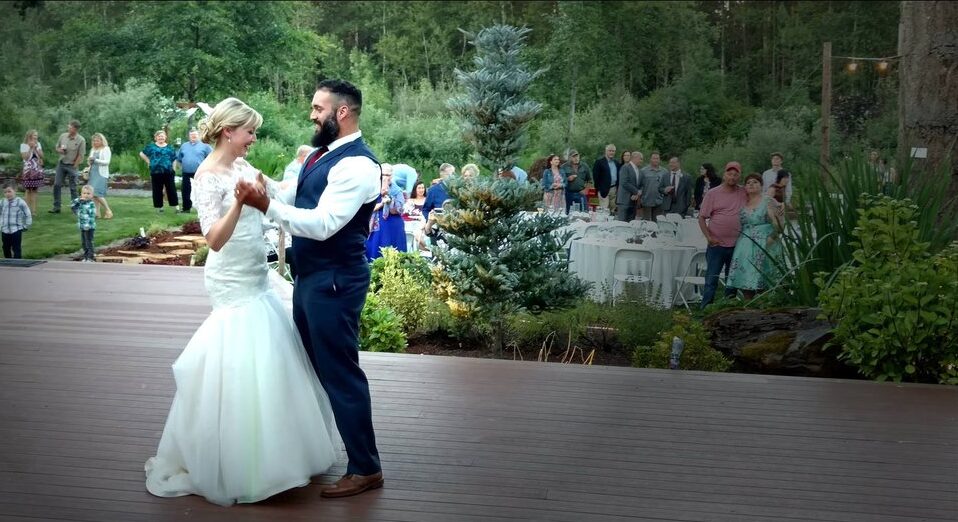
A wedding DJ’s job starts well before the reception itself. Most experienced Portland DJs will walk through a full timeline with you in the weeks leading up to the wedding covering when the ceremony music starts, how cocktail hour transitions into the reception, when toasts and speeches happen relative to dinner service, and what order the traditional moments (first dance, parent dances, bouquet toss if you’re doing one) fall in.
This planning conversation is worth taking seriously rather than treating as a formality. A DJ who asks detailed, specific questions not just “what songs do you want” but “who’s walking your grandmother to her seat” or “does your caterer need a five-minute warning before toasts” is signaling that they’ve run enough weddings to know where things typically go sideways. That kind of preparation is often the difference between a reception that flows naturally and one where the timeline visibly stalls while everyone waits to figure out what’s next.
For Oregon weddings specifically, build in a little more flexibility than you might elsewhere. Outdoor ceremonies at Gorge or coastal venues sometimes run behind if wind or last-minute weather changes force adjustments, and a Portland DJ Dan DJ who’s used to that reality builds slack into the reception schedule rather than rigidly holding to a printed timeline that no longer matches reality.
Frequently Asked Questions
How far in advance should I book a wedding DJ in Portland?
For a Saturday wedding during peak season (June through September), booking six months to a year ahead is common, since the most established DJs fill their prime dates early. Weekday or off-season weddings have more flexibility and can often be booked closer to the date.
What’s the average cost of a wedding DJ in the Portland area?
Costs vary widely based on hours of coverage, equipment included, and time of year, so it’s worth getting itemized quotes from at least two or three vendors rather than relying on a single average figure.
Does a Portland wedding DJ also handle the ceremony music, or just the reception?
Most established wedding DJs in this market offer a separate ceremony sound package alongside reception coverage, but this isn’t universal, always confirming it’s included rather than assuming.
What happens if it rains and we need to move the reception indoors at the last minute?
An experienced local DJ should be able to relocate and reset a sound system quickly, often within minutes. Ask specifically how this is handled during your consultation, since it’s one of the more common real-world scenarios in Oregon.
Can I give my DJ a do-not-play list?
Yes, any professional wedding DJ will take both a must-play and a do-not-play list, and most will build the bulk of the reception playlist around your preferences rather than a generic set.
Should I hire a separate MC, or does the DJ handle that too?
Most Portland wedding DJs also serve as the MC, handling introductions, timeline cues, and announcements. Confirm this is included, since a small number of vendors charge extra for dedicated MC services.
Is liability insurance something I should actually ask about?
Yes. Many Portland-area venues require vendors to carry liability insurance before they’re allowed to set up equipment on-site, so confirming this early can save a last-minute scramble.