A mobile DJ brings the sound system, microphones, lighting, music, and a person to run all of it, then sets up at your venue instead of relying on what the room already has. Many also act as MC, handling announcements and keeping the schedule moving. If you’re planning a wedding, birthday, corporate mixer, or private party in the Portland area, this guide explains what is usually included, how the type of venue changes the setup, and which questions to ask before you commit to anyone.
What does a mobile DJ provide? In short: the sound system, microphones, lighting, music and a person to run all of it, set up at your venue instead of relying on what the room already has. Many also act as MC, handling announcements and keeping the schedule moving. If you’re planning a wedding, birthday, corporate mixer or private party in the Portland area, this guide explains what is usually included, how the type of venue changes the setup, and which questions to ask before you commit to anyone.
A mobile DJ provides much more than music: professional sound, microphones, often lighting, MC support, and backup equipment, all planned around your venue and event. The details matter more than most people expect. Two DJs can both say they “provide sound and music” and deliver very different nights. The difference usually comes down to preparation, backup plans, and how well the DJ understands your room.
What a Mobile DJ Actually Brings to an Event
The word “mobile” means the DJ travels with everything needed to run your event. You aren’t renting a venue’s equipment or hoping the hall has a working speaker. Here is what that typically covers.
Sound system and microphones
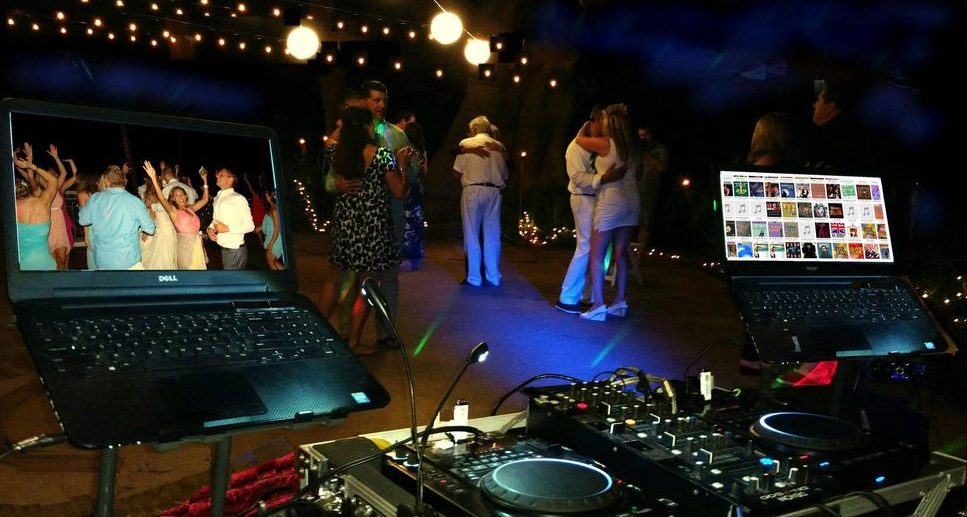
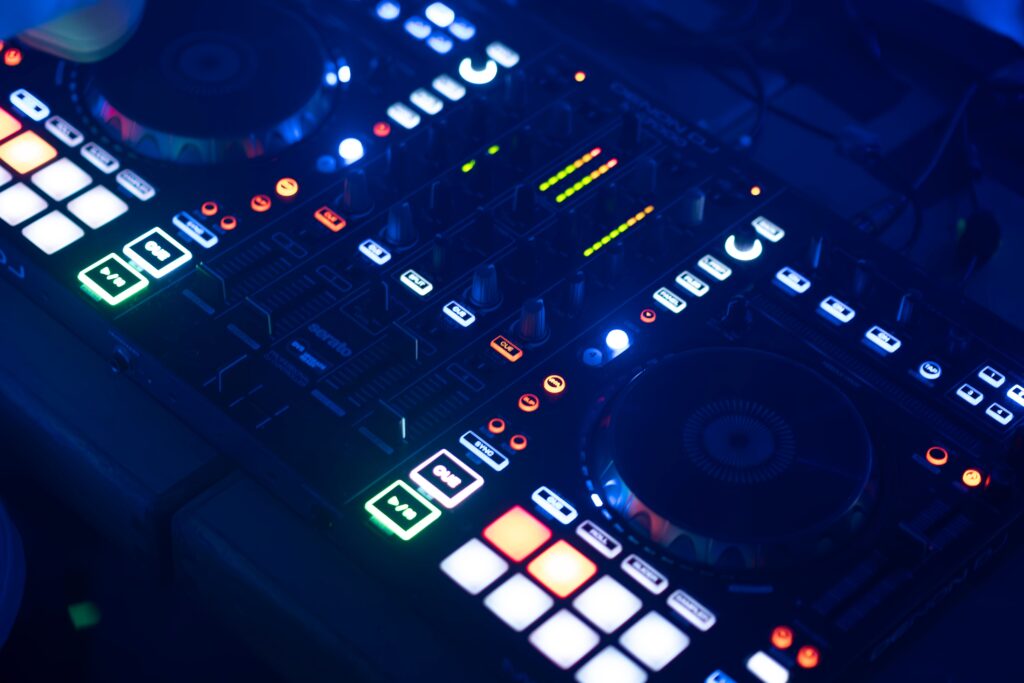
The core of the job is a professional sound system: speakers sized for your room and guest count, a mixer or controller, and the cabling to connect them. A DJ working a backyard birthday needs less than one covering a ballroom, but both need sound that is clear at the back of the room and not painful at the front.
Wireless microphones matter more than most people realize. They are used for toasts, announcements, ceremony audio, and introductions. A good setup means the person speaking can be heard by the last row without feedback or dropouts. Ask whether microphones are included and how many the DJ brings, especially if you have a ceremony, speeches, or two separate areas that both need sound.
Lighting
Many mobile DJs bring lighting that sets the mood for a dance floor, from simple uplighting to moving effects. Lighting is not always automatic, so confirm what your booking includes. For a formal dinner or a quiet corporate mixer, you may want very little. For a dance-focused reception or a milestone birthday, lighting can change how the room feels.
Music selection and mixing
A DJ does more than press play. Mixing means transitioning smoothly from one song to the next, matching energy to the moment, and adjusting as the crowd responds. A strong DJ also builds the night in phases: quieter music while guests arrive and eat, a shift when the dancing starts, and a deliberate way to close.
Good DJs also take your input seriously. Your must-play songs, do-not-play list, favorite genres, and special moments (a first dance, a parent dance, a surprise tribute) should shape the plan. Portland DJ Dan Weisman works from your song requests and preferences instead of a fixed playlist, which is how it should work for any event with personal meaning.
MC and announcements
Many events need someone to speak: introducing the wedding party, calling tables to the buffet, announcing toasts, cueing the cake cutting, or presenting an award at a company event. A DJ who also works as MC saves you from recruiting a friend or coordinating a separate vendor.
MC style varies. Some people want a lively host who jokes with the crowd. Others want a calm voice that appears only when needed. Tell the DJ which you prefer, because the same person can do either.
Backup equipment
This is the item most people forget to ask about. Equipment fails: a cable goes bad, a laptop freezes, a microphone dies. At a wedding, you can’t pause the event and come back next week. A professional brings backup gear so a single failure doesn’t stop the music. Dan brings backup equipment to every event he books, and you should ask any DJ you’re considering the same question.
What Does a Mobile DJ Provide That a Venue’s Sound System Doesn’t?
People often ask whether a mobile DJ is different from a “regular” DJ, or whether they can simply use the venue’s speakers.
A club or bar DJ usually works in one fixed room with equipment the venue already owns. A mobile DJ takes the equipment to you, which means they must plan for rooms they don’t control: unfamiliar acoustics, unknown power access, and layouts that vary widely.
A venue’s built-in system can work for background music or a short announcement. It often falls short for a full event. Some halls have no system at all. Others have one meant for presentations, not dancing. Ceremony and reception areas may need separate sound, and the existing setup may not cover both.
A practical rule: if your event involves dancing, an emcee, multiple speakers, or a guest list large enough that people can’t hear each other across the room, a mobile DJ’s equipment is usually the safer choice. Ask the venue what it provides, then ask the DJ what they would bring in addition.
How Event Type Changes What You Need
The best DJs don’t run the same format for every booking. What you need depends on what the event is for.
Weddings
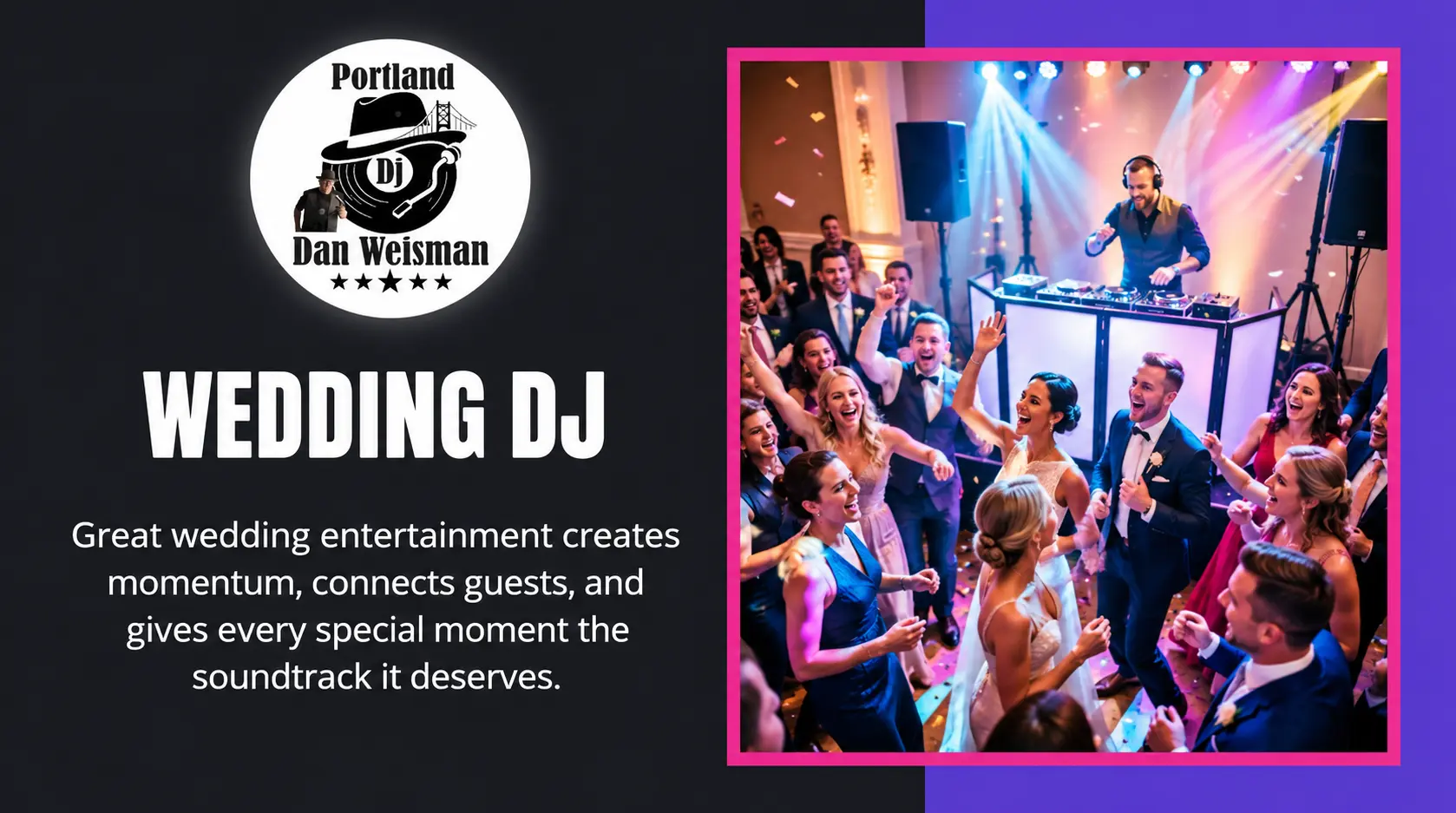
A wedding is the most schedule-driven event a DJ handles. The DJ often covers the ceremony audio, cocktail hour music, grand entrance, dinner, toasts, first dance, special dances, and the open dancing that follows. Timing matters, and a DJ who works from your timeline helps the day stay on track.
For couples with a mix of family backgrounds or musical tastes, the planning conversation matters most. A DJ who asks about your guests, not only your favorite songs, can blend styles so older relatives and younger friends both feel included. See Dan’s approach to wedding DJ services in Portland for how that planning works in practice.
Corporate events
Corporate events need a different read. Background music during a mixer should support conversation, not compete with it. Then there are transitions into announcements, awards, or speeches, which require clean microphone handling and volume that drops at the right moment.
A corporate booking is not a shrunken wedding. The goals, the crowd, and the pacing are different. More on that on the corporate party DJ page.
Birthdays and private parties
Private parties are flexible, which is both a benefit and a challenge. Because there is no standard format, the DJ needs to learn what you want the night to feel like: a dance party, a background soundtrack for conversation, or a mix of both. Age range matters too. A 40th birthday and a 5th grade banquet call for very different music and energy, even if the equipment is the same.
School events and fundraisers
School dances, banquets, and fundraisers add a few requirements: age-appropriate music, clear announcements, and often a structured program. A DJ who can adapt to what young guests want while keeping content appropriate is more valuable than one with a fixed playlist.
How Portland Venues Change the Setup
Portland-area events happen in unusually varied spaces, and the venue shapes what a DJ needs to bring and plan for.
Older and historic buildings: Converted churches, schoolhouses, and century-old halls can have beautiful character and difficult acoustics. High ceilings and hard surfaces create echo, so sound has to be placed and tuned for the room. A speaker setup that works in a carpeted conference room can sound muddy in a historic auditorium.
Hotel ballrooms and downtown venues: These often come with their own noise policies, load-in rules, and access restrictions. A DJ should ask about these in advance, including when setup is allowed and how loud the music can be.
Lofts and urban spaces: A Pearl District loft or downtown event space may have neighbors above or below. Volume control and a clean, professional presentation matter more here than raw power.
Backyards and private homes: Backyard parties are common in Portland neighborhoods, and they bring practical questions: where is the power, how far is the setup from the house, and is there a surface for the DJ table? Neighbors can also be a consideration, so talk through the end time and volume ahead of the day.
Wineries and rural venues: Willamette Valley vineyards and tasting rooms often have no house sound system at all. That makes a mobile DJ essential, and it makes planning ahead more important, since the DJ has to bring everything needed.
The rain factor. Oregon’s rainy season means outdoor events need a real contingency plan. Ask what happens if it rains: is there a covered area, an indoor backup space, and how will the equipment be protected? That conversation should happen well before the event date, not the morning of.
Questions to Ask Before You Book a Mobile DJ
When you’re comparing DJs, these questions separate prepared professionals from people who just own speakers.
- What equipment do you bring, and is it all included? Confirm speakers, microphones, and lighting separately so nothing is assumed.
- Do you bring backup equipment? A professional should say yes without hesitation.
- Have you worked at my venue or similar ones? Familiarity with a room helps, but so does a plan for rooms they haven’t seen.
- How do you handle requests and do-not-play lists? The answer should show flexibility, not a rigid set list.
- Will you act as MC, and how would you describe your style? Make sure it matches the tone you want.
- How do you plan before the event? Look for a real conversation about your venue and music, not a form you fill out and forget.
- What is your plan for weather or venue problems? This matters for outdoor events and power issues.
- What does your price include, and what costs extra? Ask about setup time, travel, extra hours, and add-ons.
- Who exactly will be at my event? You want to know the person you talk to is the person who shows up.
Notice that most of these are about preparation, not personality. Charm helps on the night, but preparation is what prevents problems.
What to Tell Your DJ So the Night Goes Smoothly
A DJ can only plan around what they know. Gather these details before your first conversation:
- Event date, start time, end time, and venue name
- Estimated guest count and general age range
- The kind of event and what you want it to feel like
- Your must-play songs, favorite genres, and do-not-play list
- Any key moments: entrances, dances, toasts, announcements, awards
- Whether you need ceremony audio or sound in more than one area
- Venue rules for setup times, noise, and power access
- Whether the event is indoors, outdoors, or both
Sharing a playlist or list of songs ahead of time makes it easier for the DJ to prepare. If you aren’t sure what you want, say so. A good DJ will ask questions and make suggestions based on your guests and the kind of event you’re hosting, not just what is popular.
What Affects the Cost of a Mobile DJ
Pricing varies from one DJ to the next, so it’s more useful to understand what drives it than to look for one number. Common factors include:
- Length of the event. More hours generally mean a higher total.
- Equipment needed. A small backyard party needs less than a large ballroom with ceremony audio and lighting.
- Services included. MC work, multiple sound areas, and extra planning can change the scope.
- Travel and setup. Distance and venue access can affect the total.
- Date and demand. Popular dates may be booked sooner.
Be cautious with prices that seem unusually low. Ask what is left out: backup gear, microphones, lighting, or the time needed for setup. The cheapest quote is not a bargain if it doesn’t cover what your event requires. The better comparison is what you get, and how prepared the DJ is, at each price. For a specific quote, give the DJ your date, venue, and event type.
When to Start Looking
There is no single rule, but earlier is safer. Popular dates, especially weekends in wedding season, can be taken well in advance. If you have a specific date and venue, start the conversation as soon as those are set. For smaller private parties, shorter notice may work, but it’s always worth asking about availability instead of assuming.
Booking early also gives you time to plan. A DJ who has weeks or months to prepare can learn your music, coordinate with the venue, and think through contingencies, so you aren’t scrambling near the date.
Common Mistakes to Avoid
Assuming the venue has sound. Confirm what the venue provides, and what it doesn’t, before you rely on it.
Skipping the planning conversation. A booking made through a form alone leaves a lot to guess. A real conversation about your event is worth the time.
Ignoring the weather. For outdoor events in Oregon, a backup plan isn’t optional.
Underestimating microphone needs. Ceremonies, toasts, and multi-area events all need reliable audio. Ask about this specifically.
Giving no direction. If you don’t share your preferences, the DJ fills in the blanks. That works for some people and disappoints others.
Choosing on price alone. The real question is what is included and how reliable the DJ is.
Forgetting the schedule. Share your timeline early so the DJ knows when announcements, dances, and transitions need to happen.
FAQs
Do mobile DJs bring their own sound equipment?
Yes, that is the point of a mobile DJ. They bring a professional sound system and set it up at your venue. Confirm exactly what is included, such as speakers, microphones, and lighting, so there are no surprises on the day.
Do mobile DJs provide lighting for events?
Many do, but it isn’t universal, so ask. Lighting needs vary a lot. A dance-focused party may benefit from it, while a quiet dinner may not need any. Ask what the DJ offers and whether it fits your event.
Can I request specific songs?
Yes, and you should. Share your must-play songs, favorite genres, and any songs to avoid. The more the DJ knows about your guests and the moments you care about, the better the music will fit.
Does a mobile DJ also work as MC?
Often. Many DJs handle announcements, introductions, and transitions in addition to music. Tell them whether you want an energetic host or a quieter presence.
Can a mobile DJ work at outdoor events?
Yes. Backyards, vineyards, and other outdoor spaces are common. Outdoor events need extra planning around power, weather, and sound coverage, so discuss a contingency plan well before the date.
How do I get a quote?
Give the DJ your date, venue, event type, guest count, and what you need for music and timing. With those details, they can talk through a setup and give you a realistic quote.
Conclusion
The best way to compare DJs is to ask how they prepare, what is included, and what happens if something goes wrong. If you would like to talk through your date and venue, visit Portland DJ Dan Weisman or call (971) 930-7140. Dan is available seven days a week, 10:00 AM to 8:00 PM.
A mobile DJ service brings professional sound, microphones, music, and often lighting directly to your event, so you don’t have to depend on what the venue already has. Whether it’s a wedding, a birthday, a corporate mixer, or a backyard party, the DJ plans the music around your guests and handles announcements so the night runs smoothly. The role of the disc jockey has evolved a lot over the years, but the goal is still the same: keep the music matched to the moment. To talk through your date and venue, call Portland DJ Dan Weisman at (971) 930-7140.